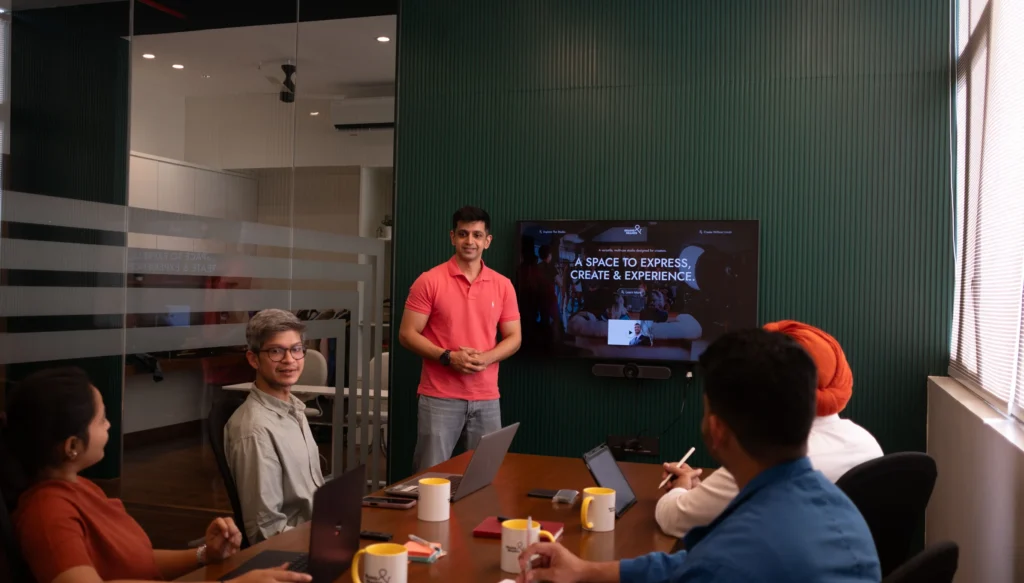
More and more businesses in Pune are starting their own video podcasts. Founders, consultancies, clinics, real estate firms and D2C brands have all realised that a regular show builds trust in a way that ads and polished posts rarely do. The question is usually not whether to start, but how corporate podcast production actually works and what it takes to do it well.
This guide walks you through it, from choosing a format to turning one recording into a month of content.
Why Pune businesses are starting video podcasts
A podcast lets people hear how you think. When a prospective client watches a founder explain a problem clearly for twenty minutes, they arrive at the first meeting already trusting that person. That is hard to achieve any other way.
It also solves the constant content problem. One well planned recording gives your marketing team long form video for YouTube, short clips for Instagram and LinkedIn, quotes for posts and material for blogs. And for hiring, a show gives candidates a real feel for your team and culture before they ever apply.
What kind of show works for a business
The best business podcasts are not sales pitches. They are genuinely useful to the people you want to reach. A few formats work especially well:
- Founder in conversation. The founder interviews industry peers, partners or customers about real problems in the space.
- Expert series. Your in-house specialists answer the questions clients ask most often, one topic per episode.
- Client stories. Customers talk through the challenge they faced and what changed, which works far better than a written case study.
- Culture and team. Short episodes with your people, useful for hiring and for internal communication.
What corporate podcast production actually involves
Good production happens in three stages, and most of the quality is decided before anyone sits down in front of a camera.
Before the shoot
This is where you decide the show’s purpose, audience, format and name, plan the first batch of episodes, and line up guests. Each episode gets a simple outline with a few key talking points, so conversations stay focused without sounding scripted.
On the day
A professional shoot needs broadcast quality microphones, a proper audio mixer, multiple cameras and controlled lighting, plus someone watching levels and framing so the host can focus entirely on the guest. For business content, a production director who keeps the conversation on track is often worth having too.
After the shoot
Editing turns raw footage into a tight episode: cutting between camera angles, cleaning audio, adding your branding and captions. Then the clips are pulled out, formatted for each platform and scheduled.
In-house setup or a studio?
Building an in-house setup sounds appealing until you add up the cameras, mics, lights, acoustic treatment and a spare room that has to stay quiet. Most businesses record a few times a month, so the gear sits idle most of the time, and someone on the team ends up learning to run it all.
A studio gives you a professional look from the first episode with none of that overhead. You come in, record a batch of episodes and leave with your footage. For most Pune businesses, that is the faster and more sensible way to start.
How one episode becomes a month of content
This is where a business podcast really pays for itself. A single forty minute conversation can give you the full episode on YouTube and Spotify, five to ten short clips for Reels, Shorts and LinkedIn, a handful of quote graphics and the raw material for a blog post. Record three or four episodes in one session and your content calendar is covered for weeks.
How we handle corporate podcasts at Brains & Brands
Our podcast studio in Pune is set up for exactly this kind of work, with Shure SM7B microphones, a Rodecaster Pro II, a multi camera 4K setup and Godox FV150 lights, plus a technician on every shoot. You can come in an hour before your slot to settle in, and your footage goes onto your SSD before you leave.
For businesses, two packages fit best. Director’s Cut adds an on-site production director who guides framing, lighting and audio for a fully managed recording. Screenplay goes further, covering concept, creative direction and content strategy before you step into the studio, with editing and post-production quoted separately. You can compare everything on our Services page.
If you are earlier in the journey, our guide on how to start a podcast in Pune covers the basics, and our video podcast studio guide explains how to plan a shoot from any part of the city.
Ready to start your company’s podcast?
If you have been thinking about a show for your business, the easiest first step is a conversation. Message us on WhatsApp at +91 89832 25507 to talk through your idea, check dates and get pricing.
FAQ
Is a podcast worth it for a small business?
Yes, if it is consistent and genuinely useful to your audience. Even a small show builds trust with the right people, and the clips it produces keep your social channels active without extra shoots.
How often should a business release episodes?
Every two weeks is a realistic rhythm for most businesses. Recording three or four episodes in one studio session makes that easy to keep up.
Do we need a professional host?
Usually not. Founders and in-house experts make the best hosts because they know the subject. A production director in the studio helps keep the conversation on track and makes first-time hosts comfortable.
Can you help with editing and clips?
Yes. Editing and post-production can be added and are quoted based on what you need, from a simple edit to full episodes with captions and short clips for social media.
